GUIDES
Front Pocket vs Bifold vs Card Holder
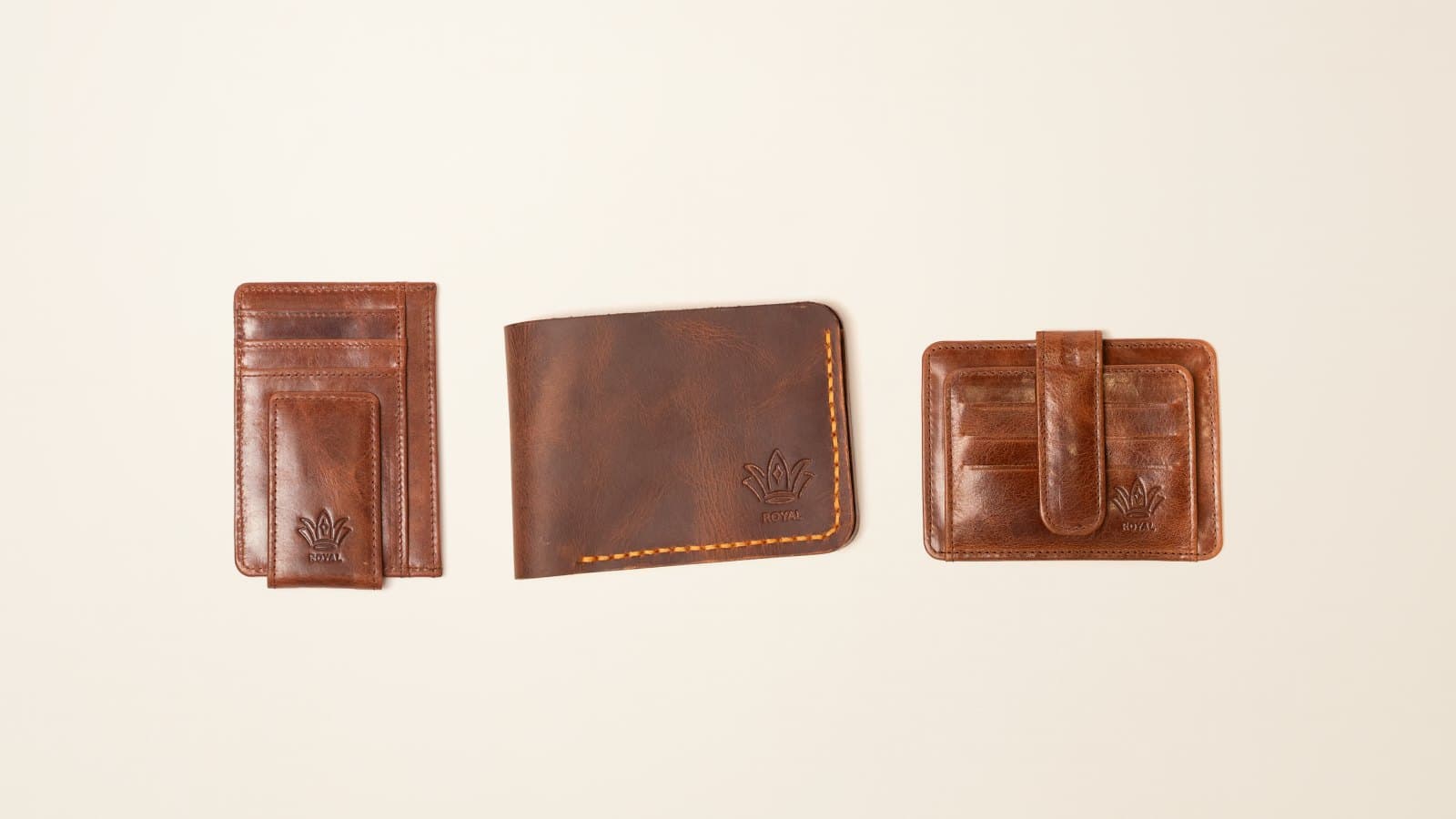
Most wallet advice online is written by people who have never had to make one fit. We cut and saddle-stitch all three of these styles by hand, which means we know exactly where each one gains bulk, where it fails first, and who ends up happy with it two years later.
Here is the honest comparison — including the cases where the style we sell least of is the right answer.
Quick comparison
| Card holder | Front pocket wallet | Bifold | |
|---|---|---|---|
| Loaded thickness | 6–10 mm | 9–12 mm | 15–25 mm |
| Realistic capacity | 3–6 cards, folded bill | 4–8 cards + bills | 8–12 cards, bills, receipts |
| Cash handling | Fold and tuck | Flat, behind cards | Full-length bill compartment |
| Best pocket | Shirt, jacket, small bag | Front trouser | Back trouser, jacket |
| Ages well? | Yes — fastest patina, most handled | Yes — fold line darkens beautifully | Yes, but bulk hides the wear |
| Fails first at | Nothing, if full-grain | Corner stitching | The spine crease |
| Royal price from | $20.00 | $26.99 | $29.99 (3-Pocket Bifold) |
The real question isn't style. It's cash.
Every wallet decision comes down to one habit most people never audit: how often do you physically handle paper money?
Tap-to-pay killed the daily need for cash for a lot of people, and the wallet market hasn't fully caught up. If you go a week without touching a bill, a bifold is carrying a compartment you use twice a month, and you're paying for it in bulk every single day. If you handle cash weekly — markets, tips, splitting a check, a trade that still runs on it — then a card holder will annoy you constantly, and no amount of minimalism is worth that friction.
Answer that honestly and the rest of this article mostly resolves itself.
Card holder
What it is: three to six cards and a folded bill, in the smallest amount of leather that will hold them.
Who it's for: the contactless payer. Someone who carries a phone, a driver's licence, one or two cards, and an ID badge. Also anyone carrying a small bag where a full wallet fights for space.
What surprises people: capacity is more forgiving than it looks. Full-grain leather has natural tension — a Royal hand-made card holder feels snug on day one and relaxes to your exact stack within about two weeks, without ever going slack the way split-leather holders do. The first-week tightness is a feature; it's the leather taking your shape.
The honest downside: cash is a fold-and-tuck affair. A twenty behind the cards is fine. Four bills and change is not.
Ages best of the three, because it's handled the most and hidden the least — the corners burnish first, then the whole face deepens.
Front pocket wallet
What it is: the compromise that actually works — real wallet function, flat enough for a front trouser pocket.
Who it's for: the person who wants one object that does everything the old bifold did, without the brick. Four to eight cards, bills flat rather than folded, still under about 12 mm loaded.
What surprises people: the ergonomics. Front-pocket carry keeps you off a wallet when you sit — an unglamorous benefit that people notice within a month — and it's meaningfully harder to lift from the front than the back.
Where cheap ones fail: the corners. That's where a wallet flexes every time it goes in or out of a pocket, and it's why our hand-stitch front pocket wallet is saddle-stitched there rather than machine-lockstitched. A saddle stitch uses two needles and one thread locked at every pass, so a nicked thread stays put instead of unzipping the seam. It's slower to make, which is precisely why most brands don't.
Bifold
What it is: the traditional answer — full-length bill compartment, six-plus card slots, folds once.
Who it's for: cash carriers, people who genuinely need eight-plus cards, and anyone who keeps receipts or business cards on them.
The honest assessment: a bifold is the right tool for a real set of needs. If you run a business in cash, or you carry a stack of cards you actually use, a bifold beats every slim alternative — and the thing to check is the fold, because the spine is where cheap bifolds die. Ours is the hand-made 3-pocket bifold: three card pockets, a full-length bill compartment, saddle-stitched along the spine, and cut thin enough (about 0.6 in) to stay flat in a pocket. The 3-Pocket + Hidden version adds a discreet compartment behind the slots for a spare card or folded emergency bill.
If your bifold is only half full most days, though — and most are — you're carrying the empty half everywhere. That's the case where a front pocket wallet or a cash clip does the same job in a third of the thickness.
How to decide in three questions
- Did you handle cash this week? No → card holder. Yes, occasionally → front pocket wallet. Yes, constantly → bifold or cash clip.
- Count the cards you used this month (not the ones you carry). Under 6 → card holder. 4–8 → front pocket. 8+ → bifold.
- Which pocket? Shirt or small bag → card holder. Front trouser → front pocket wallet. Back trouser or jacket → bifold.
If two answers point one way, that's your wallet.
What matters more than the style
Whichever you choose, two construction details decide whether it lasts two years or twenty:
Full-grain leather, not "genuine leather." Counterintuitively, "genuine leather" is a low grade — the layers left after the good outer hide is split away. It cracks and peels within a couple of years. Full-grain keeps the hide's intact outer surface, which is why it develops patina instead of wearing out. We break the grades down in full-grain vs top-grain vs genuine leather.
Saddle stitching at the stress points. Machine lockstitch is one thread looped through itself; break one loop and a seam can run. Saddle stitch holds.
Get those two right and the style is genuinely a preference. Get them wrong and the style is irrelevant — you'll be replacing it either way. That's the argument in are handmade leather wallets worth it, with the cost-per-year maths.
Royal options
Every piece is cut and finished by hand, with a 1-year warranty on stitching and hardware and 30-day returns.
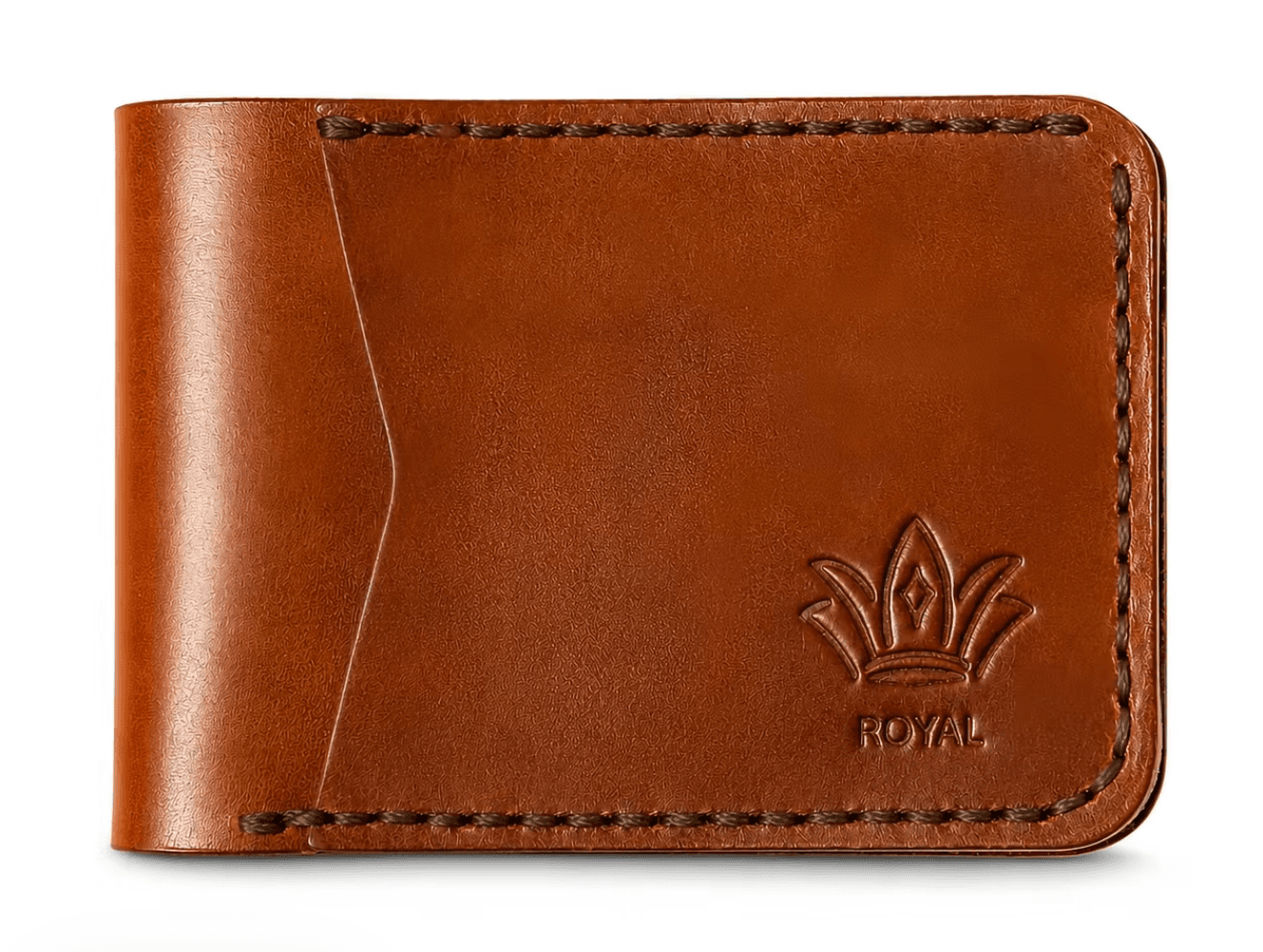
- Hand-stitch front pocket wallet — from $26.99, 4–8 cards, our most-carried piece.
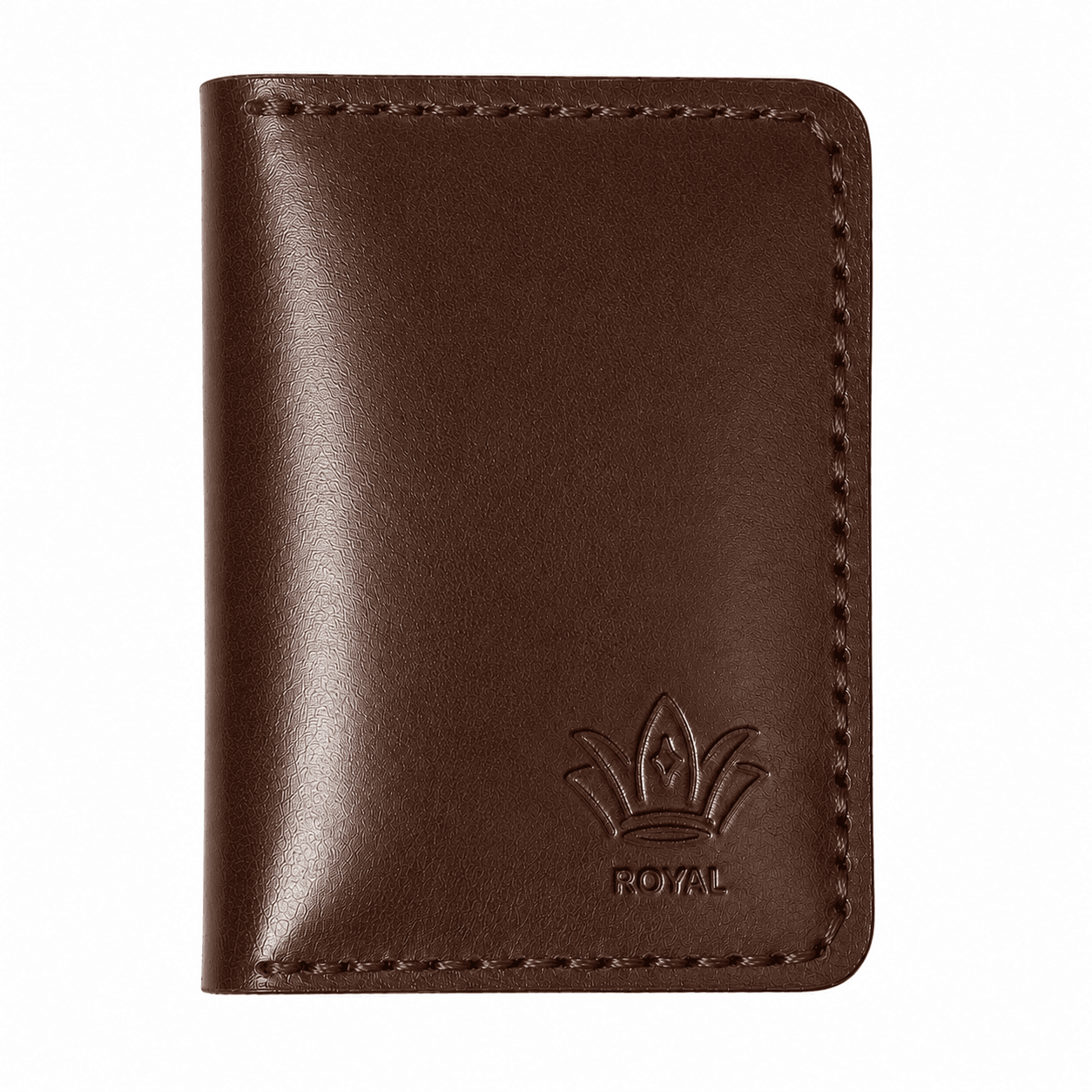
- Hand-made card holder — from $20.00, 3–6 cards, the one that converts bifold lifers.
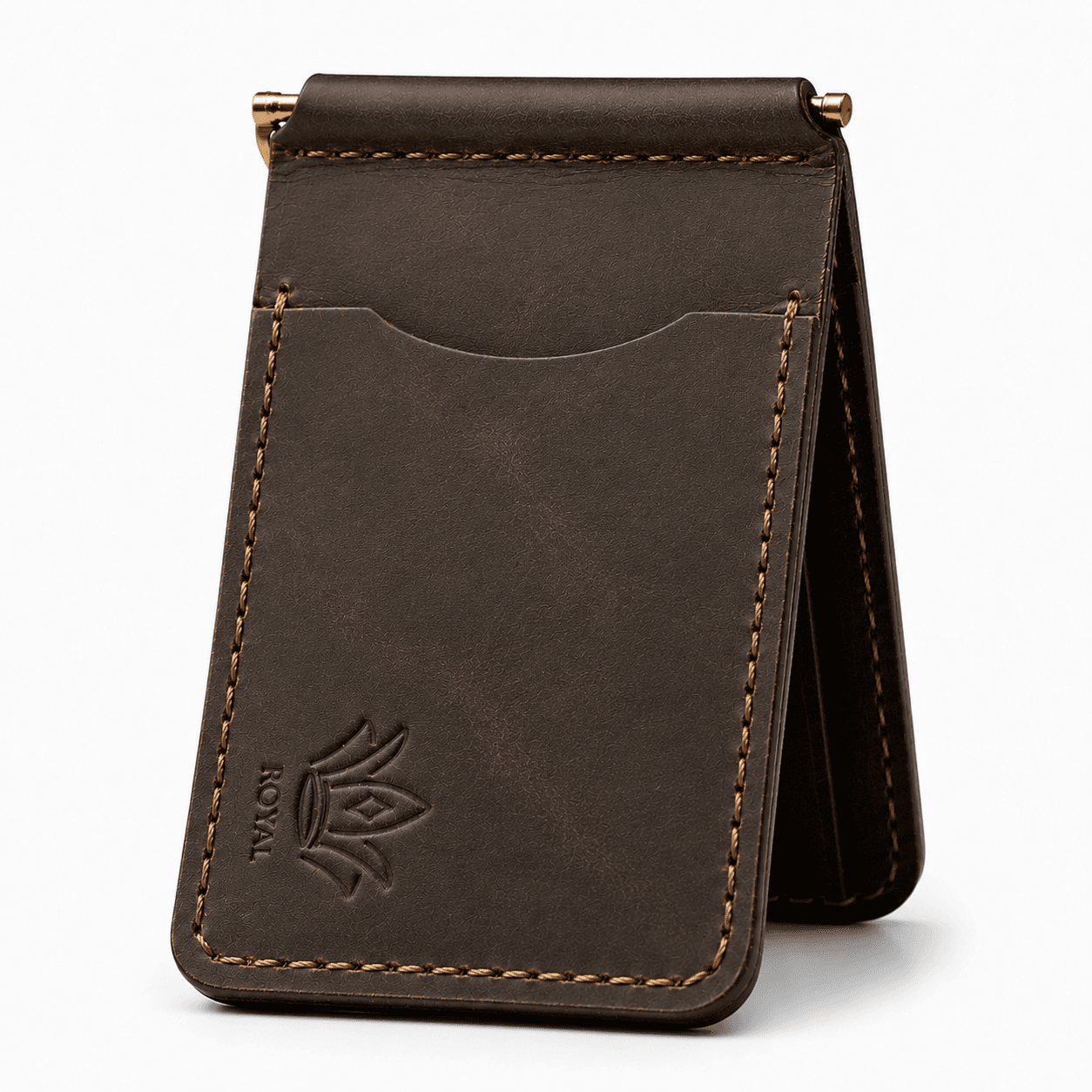
- Hand-made cash clip wallet — from $29.99, a solid-brass clip for 8–12 bills plus 4 cards, for the cash-first carrier.
- 3-pocket bifold wallet — from $29.99, full-length bill compartment, 6–10 cards, saddle-stitched spine; also available with a hidden compartment.
Whichever you land on, five minutes of care twice a year is the whole maintenance contract: how to condition a leather wallet.
Frequently asked questions
Is a front pocket wallet better than a bifold?
Better for most people, not for everyone. A front pocket wallet is roughly half the thickness and more comfortable to sit on, but a bifold holds more cards and handles cash properly. If your bifold is usually half empty, switch; if it's genuinely full, don't.
How many cards fit in a card holder?
Comfortably three to six, plus a folded bill. Full-grain leather relaxes to your stack over the first couple of weeks, so a new holder feeling tight is correct, not a sizing mistake.
Which wallet style lasts longest?
Construction decides this, not style. Full-grain leather with saddle stitching at the stress points lasts a decade or more in any of the three styles; corrected or "genuine" leather cracks within two or three years in all of them.
Do I need RFID blocking in any of these?
It's optional. Contactless cards use encrypted one-time codes and documented real-world skimming is rare — we lay out the evidence in RFID wallets explained. Never trade leather quality or slimness for a shielding layer.
Can I use a card holder if I still carry some cash?
Yes, up to a point — one or two folded bills sit fine behind the cards. Past that, a front pocket wallet or a cash clip keeps bills flat and is the more comfortable answer.
Shop the story