CARE GUIDES
How to Condition a Leather Wallet in 6 Steps
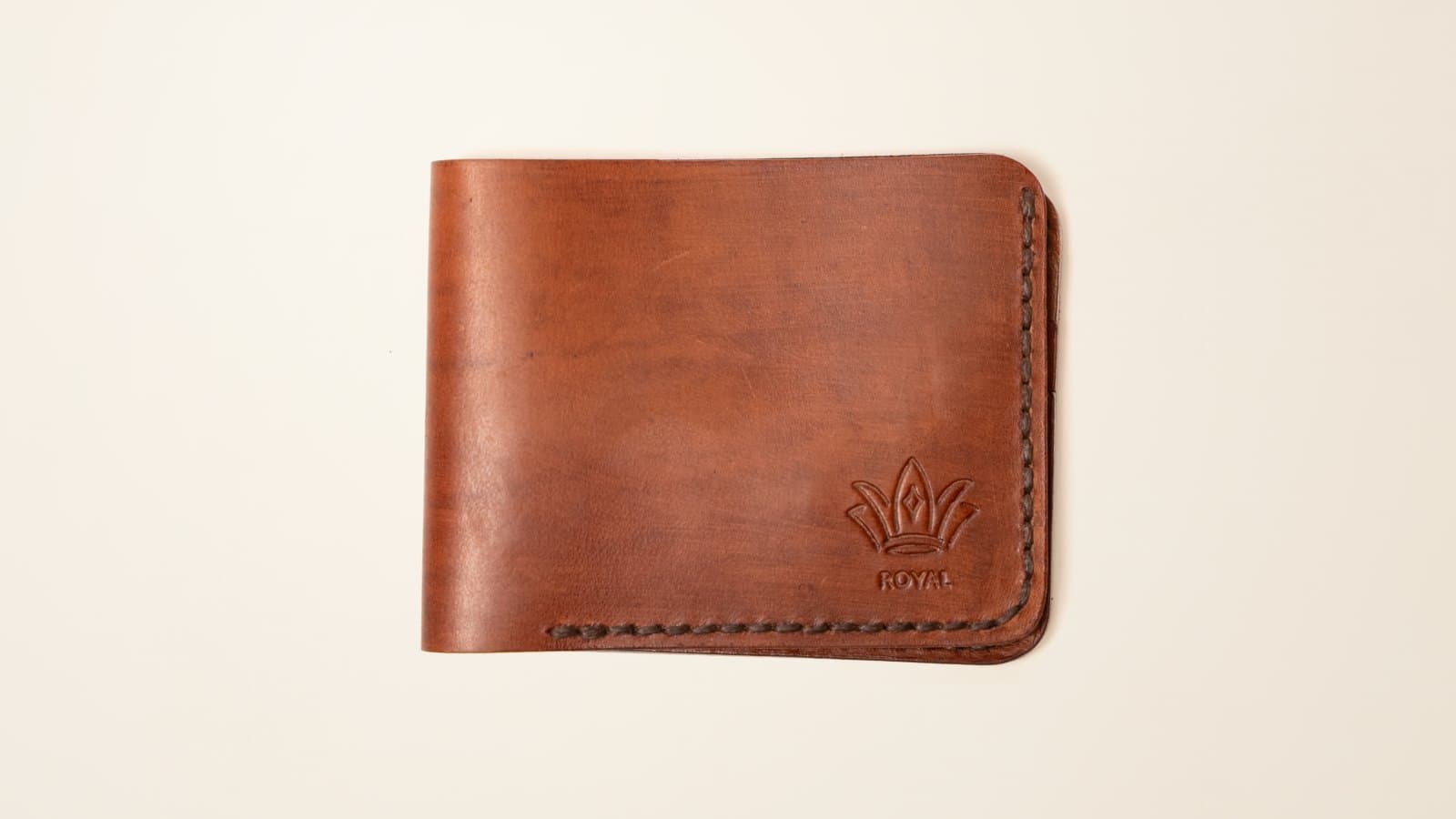
A good full-grain leather wallet is built to outlast a decade of pockets — but only if the leather stays fed. Conditioning is the five-minute ritual that keeps fibers supple, deepens color, and turns everyday wear into patina instead of cracks.
Here's the exact method we recommend for every wallet that leaves our workshop, plus the mistakes we see most often on wallets that come in for warranty work.
When does a wallet actually need conditioning?
Not on a rigid calendar — on evidence. Pull your wallet out and look for:
- A dry, matte, slightly gray cast where there used to be depth of color
- Lightening at the fold and corners — the flex points dry out first
- A stiff, papery feel when you flex the leather gently
- Fine surface lines when you bend it (the warning stage before cracking)
For most wallets carried daily, that adds up to conditioning two to four times a year. In dry winters or hot, air-conditioned climates, lean toward four. A wallet that lives in a bag rather than a back pocket may need it only once or twice.
One thing conditioning is not: a fix for a soaked wallet. If yours has been through the wash or the rain, let it air-dry completely at room temperature first — never on a radiator or with a hair dryer — and condition it after it's fully dry.
What to use (and what to keep far away)
You don't need a shelf of products. You need one neutral leather conditioner appropriate for vegetable- and drum-dyed full-grain leather:
- Leather cream — the everyday choice. Balanced oils and waxes, easy to apply thin, minimal darkening. Best default for wallets.
- Balm/wax-forward conditioners — slightly more surface protection and shine, a touch more darkening. Nice on darker leathers.
- Oil-forward products (neatsfoot, mink) — penetrate deep and darken noticeably. Overkill for a wallet that's conditioned regularly; save these for rescue jobs on badly dried leather, used sparingly.
Skip the kitchen remedies. Olive oil, coconut oil, and petroleum jelly are the three we're asked about most, and all three cause problems: food oils can go rancid inside the fibers and darken unevenly, and heavy petroleum products can clog the grain and leave a tacky surface that attracts dirt. A proper conditioner costs about as much as two coffees and lasts years.
The 6-step method
1. Empty it completely. Cards, cash, the receipts you were definitely going to file. You want the leather relaxed and flat, not stretched around contents.
2. Clean before you feed. Wipe every surface with a barely-damp, soft cloth to lift surface dirt, then let it dry for a few minutes. Conditioning over grime seals the grime in.
3. Patch test. Dab a small amount of conditioner somewhere hidden — inside a card slot, the interior base — and give it a few minutes. Every conditioner darkens leather at least slightly while it absorbs; the patch test tells you how much of that stays. On our chocolate and black leathers you'll barely notice; on tan and natural leathers, expect a richer, warmer tone.
4. Apply thin, in circles. A pea-sized amount on a soft cloth covers an entire wallet face. Work it in with light, circular strokes, hitting the flex points — the fold, the corners, the edges — where the leather works hardest. Two thin coats always beat one heavy one; leather drinks what it needs and sits greasy under what it doesn't.
5. Let it absorb. Set the wallet somewhere room-temperature and out of the sun for 30–60 minutes (overnight after a heavy application). This is the step impatience ruins — cards back in too early press wet conditioner into uneven blotches.
6. Buff to finish. A clean, dry cloth and thirty seconds of brisk, light buffing lifts any residue and brings up a soft glow — not a shine, a glow. That's the look of fed full-grain.
Full-grain is a different animal (in a good way)
If your wallet is full-grain — the intact outer layer of the hide, the only grade we cut at Royal — conditioning is genuinely maintenance, not resuscitation. Full-grain's fiber structure is dense and unbroken, so it needs less product, less often, than corrected or "genuine" leathers. Over-conditioning is the more common sin: leather that never gets to breathe stays soft but goes limp and loses the crisp structure of the stitching.
Condition lightly, let the leather work, and what you get in return is patina — the darkened fold lines, the burnished corners, the one-of-a-kind character that makes a five-year-old full-grain wallet look better than a five-week-old anything else. (New to the grades? Here's full-grain vs. top-grain vs. genuine leather, explained.)
The five mistakes that ruin wallets
- Heat drying. Radiators, dryers, dashboards, hair dryers — heat cooks the oils out and guarantees cracking. Room temperature, always.
- Over-oiling. A saturated wallet goes floppy, darkens unevenly, and can weep oil onto cards and pockets. Thin coats.
- Conditioning over dirt. Step 2 exists for a reason.
- Silicone "protector" sprays. Many seal the surface so the leather can't absorb conditioner later. Full-grain wants to breathe.
- Ignoring the edges. Edges and fold lines fail first and get conditioned last. Reverse that.
Five minutes, twice a year
That's the whole contract. A drawer-friendly ritual — empty, wipe, thin coat, wait, buff — and a full-grain wallet becomes the rare object that looks better at year ten than year one. Every Royal wallet also carries a 1-year warranty on stitching and hardware, but honestly: the wallets we see at year five that still look showroom-adjacent all have owners who do this.
Due for an upgrade before you start a care routine? Start with something worth caring for: our hand-stitched full-grain wallets and slim card holders are cut and saddle-stitched. And if you're conditioning a gift before you wrap it — smart move — here's why leather is the traditional 3rd anniversary gift.
Frequently asked questions
How often should I condition a leather wallet?
Two to four times a year for a daily-carry wallet, guided by feel: condition when the leather looks dull or feels dry and stiff, not on a fixed schedule. Over-conditioning is as real a problem as neglect.
Can I use olive oil or coconut oil on a leather wallet?
Avoid it. Food oils can turn rancid inside the leather, darken it unevenly, and attract dirt. A dedicated neutral leather cream is inexpensive and formulated to absorb cleanly.
Will conditioner darken my wallet?
Slightly and temporarily on dark leathers; more noticeably and semi-permanently on tan and natural leathers. Always patch test inside a card slot first.
My wallet got soaked — do I condition it now?
No. Blot it, reshape it, and let it air-dry completely at room temperature (12–24 hours), then condition once dry. Conditioning wet leather traps moisture.
How do I fix scratches on a full-grain wallet?
Light scratches usually buff out with a fingertip's warmth or disappear into the patina after a thin coat of conditioner. Deep gouges are permanent — though on full-grain, most owners come to like them.
From the Royal workshop — where every wallet is saddle-stitched to survive the decade that proves it. Shop wallets →
Shop the story