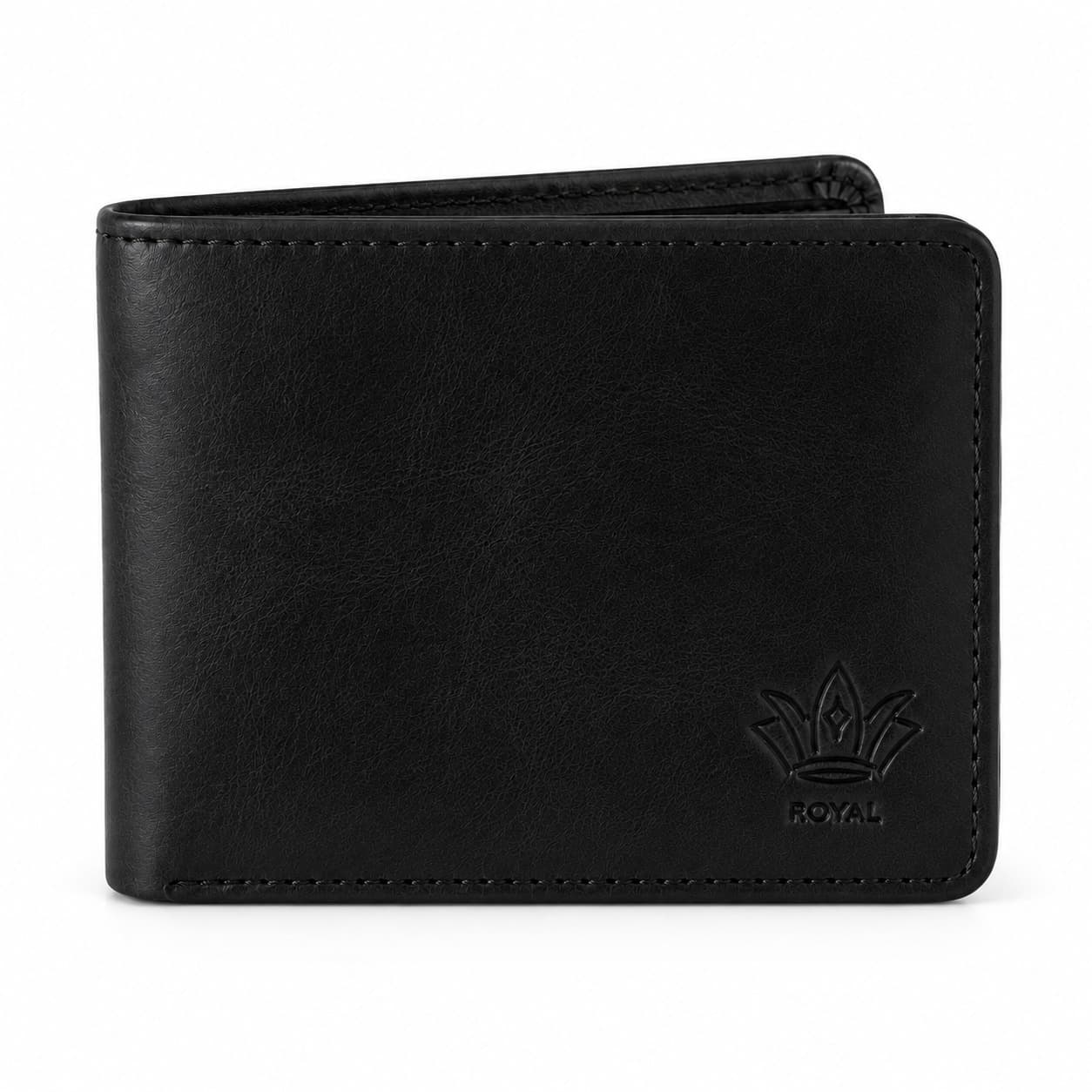
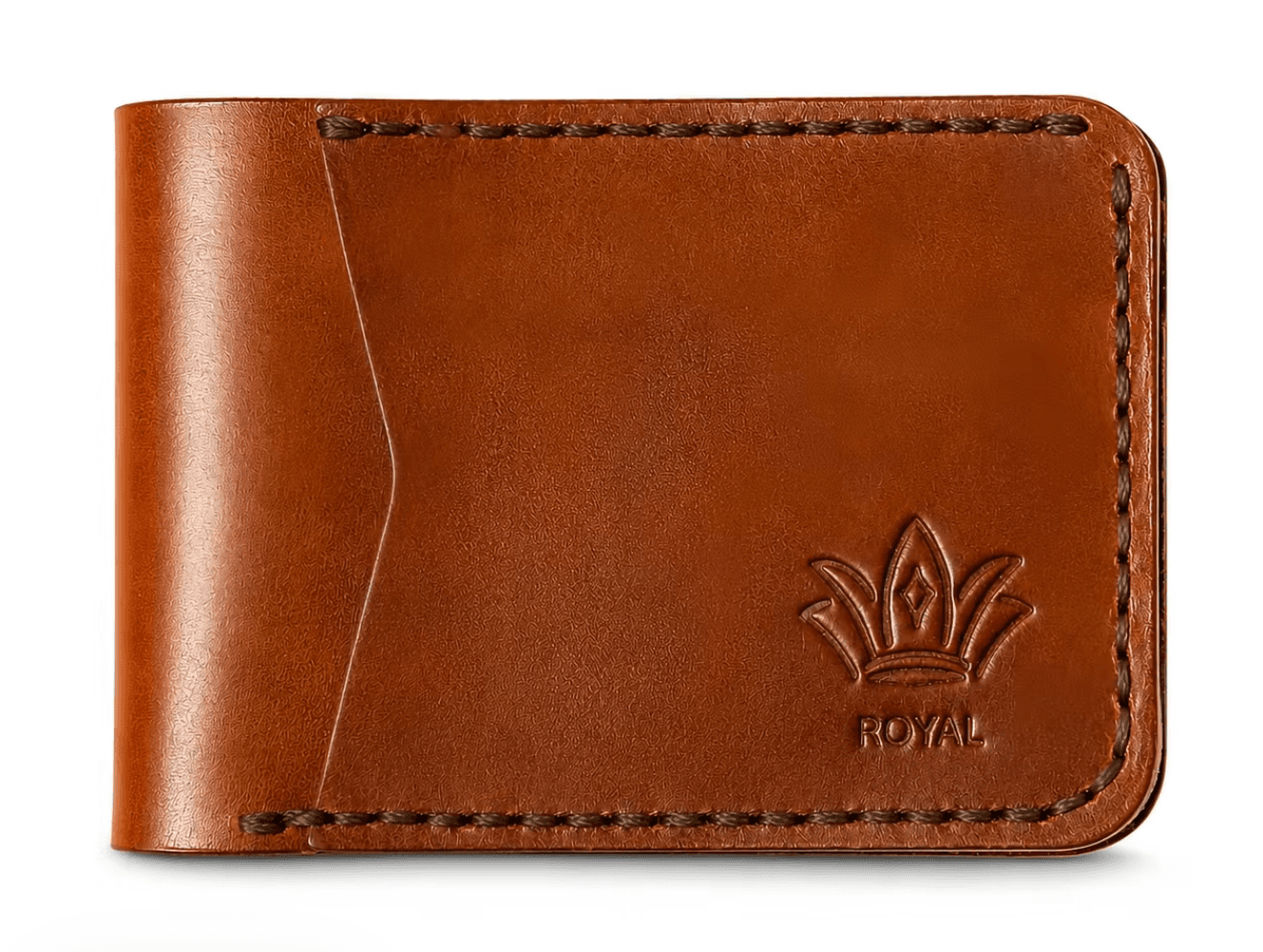
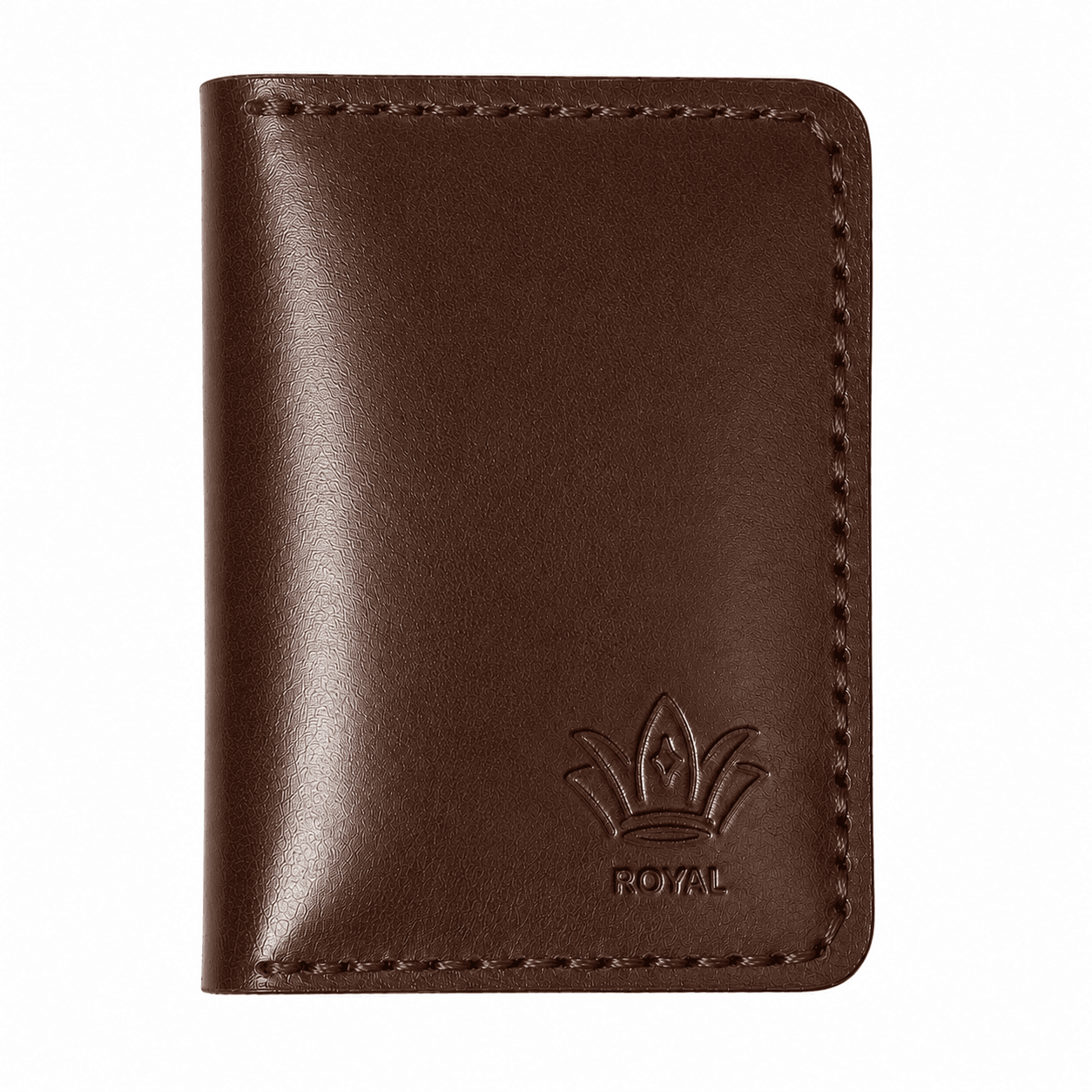
LEATHER CARE
How to Break In a Leather Wallet
A new full-grain wallet is stiff. The card slots grip harder than they will in a month, the fold does not want to close flat, and the whole thing sits in a pocket like a small book. None of that is a fault. It is what unworked leather feels like, and the first few weeks are where it turns into the wallet you will carry for a decade.
This guide is about those weeks only: what to load on day one, how to ease the slots without stretching them, what never to do to a new wallet, and how to tell break-in from damage. It is not about keeping a wallet conditioned over the years — that is how to condition a leather wallet — and it is not about the colour change that comes later, which is its own subject.
What break-in actually is
Full-grain leather is the outer layer of the hide with its fibres intact. When it is cut and stitched it has not yet been bent along the lines it will live on, and its fibres have not been compressed where the cards will sit. Break-in is the leather taking those shapes: the fold creasing where you fold it, the slot mouths relaxing to the thickness of what you keep in them, the back panel curving to the pocket it rides in.
That is why a broken-in wallet feels like yours and nobody else's. It is also why you cannot buy one pre-broken-in from a shelf: the shape comes from your cards and your pocket. The only thing a maker can do is build it from leather that will take the shape and keep it, which is the case for full-grain and is not the case for coated or bonded grades (the ladder is in full-grain vs top-grain vs genuine leather). A "genuine leather" wallet does not break in. It loosens, and then it cracks.
Day one: load it with what you actually carry
The single most common mistake is forcing a full stack of cards in on the first day to "stretch it". Leather stretches, but it does not shrink back. A slot forced over three cards on day one will fit three cards loosely forever, and a slot forced over a stack that does not belong there tears at the mouth rather than stretching.
Instead, empty the old wallet and sort it. Keep what you used this month: one or two payment cards, your ID, perhaps a transit card. Move loyalty cards and backups to your phone. Most people land on four to six cards, which is what a hand-made wallet is cut for. Load those, in the slots they will live in, and leave them there. The slots will take their shape from the cards you keep, so decide now which card goes where and keep to it for the first month.
If the wallet has a cash fold, put a few notes in and fold it closed. If it has a flap or a magnet closure, close it. Then put it in the pocket it will live in and go about your day. That is the whole technique. Most of break-in is time and carry.
Week one: the slots are tight, and that is correct
For the first week every card will take a firm push to seat and a firm pull to draw. Do not pry the slot open with a finger, do not run a card along the mouth to widen it, and do not work the leather with oil or water to soften it. A tight slot is a slot that will hold a card securely in a year; a slot opened early is a slot that drops a card on a train platform in a year.
What helps, and costs nothing, is simply using it. Draw the card you pay with, pay, put it back. Every pass eases the fibres at the mouth of that slot by a fraction, in the direction the card travels. By day seven the payment slot is noticeably easier and the ID slot, which you draw less, is still firm. That difference is not a defect; it is the wallet learning which slot does the most work.
The fold follows the same rule. Open and close the wallet normally. Do not fold it backwards to "loosen the spine", which strains the stitching at the hinge from the wrong side. A few hundred ordinary openings over a fortnight will crease it exactly where it needs to crease.
Weeks two to four: it starts to settle
Somewhere in the second week the wallet stops feeling new. It closes flat and stays closed. The slots you use most have eased to a smooth draw, and the leather over the cards has begun to show the faint outlines of what is inside, which is the first sign of the shape setting. The back panel has taken a slight curve from the pocket.
This is the point to make any change you are going to make. If a card is in the wrong slot, move it now; after the first month the slot has set around the card that lived there and a thicker replacement will be tight again for a while. If you want to add a card you left out, add it to the slot it will stay in and give that slot its own week.
By the end of the month, break-in is done for most pieces. A card holder that you handle constantly gets there sooner; a bifold with more leather and fewer handlings takes a little longer. Either way the wallet now has the fit it will keep, and the only thing that changes from here is the colour and sheen of the surface, which is a different process on a longer clock.
Six things never to do to a new wallet
- Do not soak it, steam it or hold it over a kettle. Water and heat do soften leather. They also strip the oils that keep it supple, so the wallet goes soft for a day and stiff and dull for a month. The temporary give is not worth the permanent cost.
- Do not use a hair dryer or leave it on a radiator. Direct heat shrinks full-grain unevenly and can lift the finish at the edges. The number of wallets we have seen with a warped back panel that were "just warmed up a bit" is not small.
- Do not oil it to speed things up. A new wallet is already conditioned by the tannery. Adding oil now oversaturates the leather, darkens it in patches, and makes the slots slippery rather than easy. The first thin coat of conditioner belongs months in, not days, and the schedule is in the conditioning guide.
- Do not overstuff it. Covered above, and worth saying twice because it is the one that does lasting harm.
- Do not sit on it. A back-pocket wallet that is sat on all day breaks in to the shape of a chair, with a permanent bow through the cards. If you must carry in the back pocket, take it out when you sit. If you can, carry front: that is the whole case for the front-pocket format in front pocket vs bifold vs card holder.
- Do not rub the surface with anything abrasive to hurry the sheen. The sheen comes from your hands over months. A cloth with any grit in it scratches the grain and the scratch stays.
Break-in by format
Card holders
The quickest to break in, because there is little leather and you handle it every time you pay. Expect a stiff first few days and a settled piece inside two weeks. The thing to watch is the centre pocket on a multi-slot holder, which tends to be loaded with everything that did not fit elsewhere; give it a defined job and keep to it. A slim card holder is also the format where a single extra card makes the most difference to fit, so be strict about the count. The question of how many cards a minimalist piece should hold is answered in the minimalist wallet guide, not here.
Front pocket wallets
A front pocket wallet has a cash fold and two or three slots, and it breaks in from the fold outwards: the hinge creases first, then the slots, then the back panel curves to the thigh. Three to four weeks is typical. The fold wants a few notes in it from day one so it learns to close over something rather than flat; an empty fold broken in flat will gap when you finally put cash in it.
Bifolds
The most leather and the most structure, so the slowest: a month to six weeks for the whole piece to settle, with the ID window and the inner slots lagging the outer ones. Resist the urge to fill every slot because the slots are there. A bifold with eight slots and four cards breaks in cleanly; one with eight slots and eleven cards breaks in bowed and never closes flat again. The bifold and three-pocket wallets we make are cut to close flat over a realistic load, and they will.
Flap and magnet closures
A flap closure is stiff at the fold line for the first week and then drops into place. A magnet closure needs no break-in at the catch, but the leather under it still does: let the magnet pull the flap closed rather than pressing it, so the fold creases where the magnet wants it.
How to tell break-in from damage
Stiffness, firm slots, a fold that will not sit flat, a faint outline of the cards showing through: all break-in, all expected, all over within a month. These are not:
- A slot mouth that has split at the corner. Leather stretches; it does not split unless forced over something far too thick. A split mouth is overloading, and it does not heal.
- A stitch that has pulled through the leather or gone slack. On a saddle-stitched piece the stitches are locked individually and a pulled stitch is a sign of a real strain, usually a back pocket and a chair.
- Edges lifting or going fuzzy. A burnished edge stays burnished through break-in. An edge that peels in week two was painted over a raw edge rather than burnished, and is a construction problem, not a break-in one.
- Colour coming off on your hands or your cards. A little transfer from a freshly dyed piece in the first days is normal. Continued transfer after a week is a finish that was not fixed.
If you see any of the second list on a wallet from us, write to us with a photograph. Full-grain and hand stitching are the point of the thing, and a piece that fails in its first month has not earned its price.
When break-in is finished
You will know. The wallet closes without being told to, the card you pay with draws in one motion, and the leather has a slight give under the thumb that it did not have in the box. That fit is now yours for the life of the piece. What happens next — the colour deepening, the sheen building at the fold and the corners — takes months rather than weeks and asks nothing of you but carrying it. The only maintenance it wants from here is the occasional thin coat of conditioner, on the schedule in our leather care page, and the good sense not to sit on it.
Common questions
How long does it take to break in a leather wallet?
About a month of daily carry for most full-grain wallets. A card holder settles in around two weeks; a bifold can take six. The slots you use most ease first.
Should I stretch the card slots on a new wallet?
No. Load each slot with the card that will live in it and let use ease the mouth. A slot forced wider on day one stays loose and drops cards; one that is left to settle grips for years.
Can I use water or heat to soften a new leather wallet?
Do not. Water and heat strip the oils that keep full-grain supple, so the wallet goes soft for a day and stiff for a month. Ordinary daily use does the job without the cost.
Should I condition a brand new leather wallet?
Not in the first weeks. A new wallet is already conditioned by the tannery, and adding oil now darkens it in patches and makes the slots slippery. The first thin coat belongs a few months in.
Why are the card slots so tight on a new wallet?
Because the leather has not yet been compressed to the thickness of a card. A tight new slot is the one that will hold a card securely in a year. Draw and replace your cards normally and it eases within a week.
Is a stiff new wallet a sign of poor quality?
The opposite. Full-grain leather is stiff when new because its fibres are intact; it is the grade that breaks in rather than loosening and cracking. A wallet that is soft out of the box is usually coated or bonded leather that has nothing to break in.
Shop the story